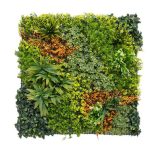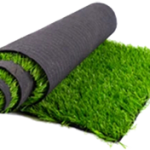

Artificial grass, also known as synthetic turf, has become a popular solution for landscaping, sports fields, and commercial spaces worldwide. The technology behind artificial grass has improved tremendously over the years, offering more realistic, durable, and low-maintenance options. However, selecting the right artificial grass involves understanding various specifications, including materials, pile height, density, and backing systems. This guide will walk you through all the essential specifications of artificial grass so you can make an informed decision.
1. Materials Used in Artificial Grass
Artificial grass is composed of different synthetic materials, primarily:
- Polyethylene (PE): The most common material used for its soft and realistic appearance. Polyethylene fibers are UV-resistant, durable, and ideal for landscaping and residential applications.
- Polypropylene (PP): A more economical material that is less durable compared to polyethylene. It is often used in low-traffic areas or as thatch layers in combination with PE.
- Nylon: The strongest and most resilient material, making it ideal for high-traffic areas like sports fields. However, it is more expensive and less commonly used for residential projects.
Choosing the Right Material:
- For landscaping and residential purposes, PE is the best choice.
- For commercial or sports applications, a mix of PE and Nylon works well.
- For low-budget projects, PP can be a suitable option.
2. Pile Height
Pile height refers to the length of the artificial grass fibers, measured in millimeters (mm). This is one of the most crucial specifications to consider.
Short Pile (10-25mm):
- Best suited for putting greens, balconies, and indoor areas.
- Provides a neat and low-maintenance surface.
Medium Pile (25-40mm):
- Common for residential lawns, gardens, and light commercial spaces.
- Strikes a balance between aesthetics and functionality.
Long Pile (40-60mm):
- Ideal for sports fields and heavy-use areas.
- Mimics the look of natural grass but requires more infill to maintain upright fibers.
Choosing the Right Pile Height:
- If aesthetics are your priority, opt for a pile height of 30-40mm.
- For durability in high-traffic areas, a shorter pile works better.
- For sports, such as football or rugby, a longer pile is recommended.
3. Density and Stitch Rate
The density of artificial grass refers to the number of stitches (tufts) per square meter, and it directly impacts the appearance and durability of the turf.
Stitch Rate:
- The number of stitches per 10 cm of the grass roll.
- A higher stitch rate means denser and more luxurious grass.
Tufts per m²:
- Average residential artificial grass has 15,000 to 20,000 tufts/m².
- Premium options can reach up to 30,000 tufts/m².
Importance of Density:
- High-density grass looks fuller and more realistic.
- Dense grass also tends to be more durable and comfortable underfoot.
- Lower density is suitable for budget-conscious buyers or low-traffic areas.
4. Infill Materials
Infill is placed between the fibers of artificial grass to add weight, improve stability, and keep the blades upright. The most common types of infill include:
Silica Sand:
- Economical and widely used.
- Provides stability and support but can compact over time.
Rubber Granules:
- Commonly used in sports fields for shock absorption.
- Reduces the risk of injuries.
Organic Infill:
- Made of cork or coconut fibers.
- Environmentally friendly and cooler than sand or rubber.
Zeolite:
- Natural infill that neutralizes odors, especially for pet-friendly lawns.
Choosing the Right Infill:
- For landscaping, silica sand or organic infill works best.
- For sports fields, rubber infill offers durability and safety.
- For pet owners, zeolite is an excellent choice to control odors.
5. Backing System
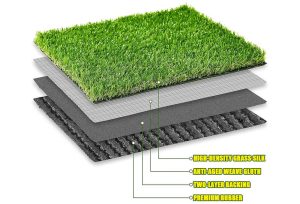
The backing of artificial grass is critical for drainage, stability, and durability. There are two primary components of backing systems:
- Primary Backing: Holds the grass fibers in place and ensures they remain secure.
- Secondary Backing: Usually made of latex or polyurethane to provide additional strength and water resistance.
Types of Backing Systems:
Perforated Backing:
- Contains holes for drainage, making it suitable for residential and landscaping purposes.
Non-Perforated Backing:
- Used in indoor applications where drainage is not a concern.
Polyurethane Backing:
- More durable and water-resistant than latex, ideal for wet climates.
Latex Backing:
- Cost-effective and sufficient for most landscaping applications.
Choosing the Right Backing:
- For outdoor spaces, perforated polyurethane backing ensures excellent drainage and durability.
- For low-budget projects, latex-backed grass is a practical choice.
6. UV Stability
Artificial grass is exposed to sunlight, which can cause fading and degradation over time. UV-stabilized grass has protective additives that prevent color loss and fiber breakdown.
- UV Warranty: Many artificial grass products come with warranties ranging from 5 to 15 years for UV protection.
- Importance: UV-stabilized grass maintains its color and longevity, even in harsh climates.
7. Fire Resistance
Safety is a priority when installing artificial grass. High-quality artificial grass products are designed to be fire-resistant, meaning they will not catch fire easily and will self-extinguish when exposed to flames.
- Look for grass that meets ISO fire safety standards.
- Fire-resistant grass is essential for commercial spaces, schools, and playgrounds.
8. Drainage Rate
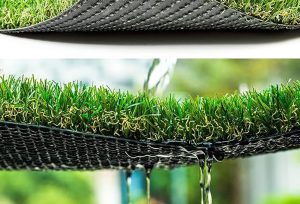
The drainage rate of artificial grass is measured in liters per minute per square meter (L/m²/min). Good drainage ensures that water and liquids are efficiently removed, preventing puddles and odors.
- Average Drainage Rate: 40-60 L/m²/min.
- High Drainage: Up to 90 L/m²/min, ideal for areas prone to heavy rainfall.
9. Color and Appearance
Artificial grass is available in various shades of green and brown to mimic natural grass. Some features that enhance realism include:
- Multi-Toned Fibers: Combining shades of green, yellow, and brown for a natural look.
- Thatch Layer: A brown, curly layer at the base of the turf to replicate natural soil.
- Blade Shape: W-shaped, C-shaped, and diamond-shaped fibers improve durability and aesthetics.
Tips for Choosing Appearance:
- Choose grass with multi-toned fibers and thatch for a realistic look.
- Darker green tones are best for shady areas, while lighter shades work well in sunny spaces.
10. Maintenance Considerations
While artificial grass is low-maintenance, it is not maintenance-free. Key maintenance tasks include:
- Regular Brushing: Keeps fibers upright and prevents matting.
- Leaf Removal: Use a leaf blower or rake to remove debris.
- Cleaning: Hose down periodically and use mild detergents for stains.
- Infill Top-Up: Check and replenish infill as needed.
Final Thoughts
Understanding artificial grass specifications is essential for choosing the right product for your needs. Whether you are upgrading your backyard, installing a sports field, or landscaping a commercial space, factors like material, pile height, density, infill, and backing all play a significant role in performance and longevity. By carefully evaluating these specifications, you can select artificial grass that meets your aesthetic, functional, and budgetary requirements.
Investing in high-quality artificial grass ensures a beautiful, low-maintenance lawn or field for years to come. If you need further assistance in selecting the perfect artificial turf, consult with us to discuss your specific project requirements.