When it comes to artificial grass, a common question arises: should you choose infill or non-infill artificial grass? The decision depends on various factors. In this article, we will delve into the reasons for using infill and discuss situations where infill may not be necessary.
To make it easier to navigate, here is a breakdown of the topics covered:
Why Use Infill for Artificial Grass?
Infill plays a crucial role in artificial grass systems. Below are the primary reasons why infill is recommended:
1. Structure and Uprightness
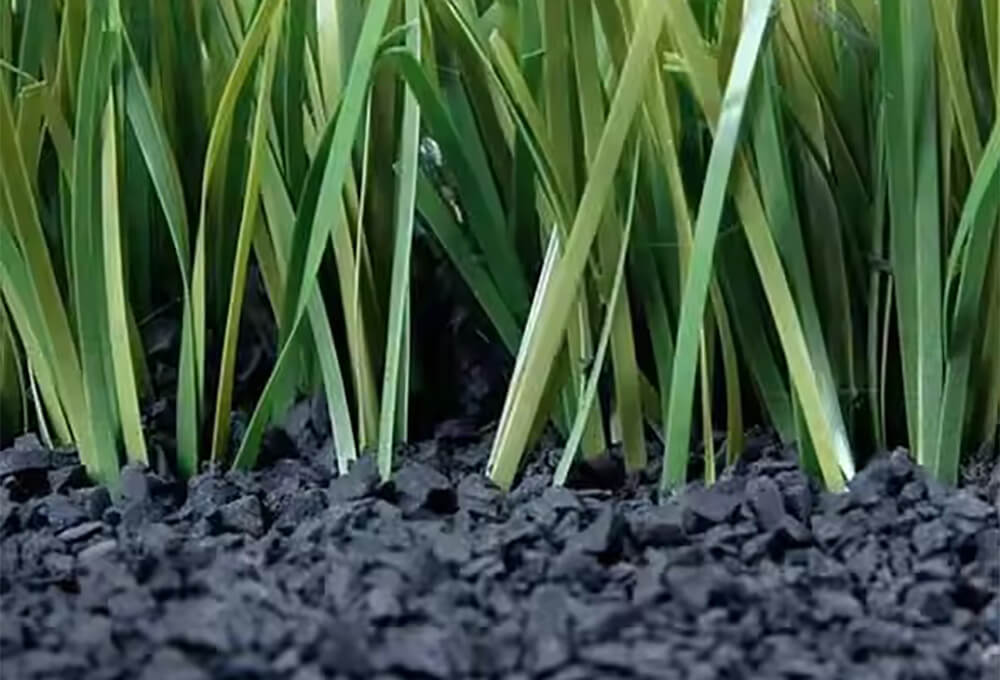
Infill helps artificial grass fibers stand upright, maintaining a natural appearance. Without infill, artificial grass tends to flatten, especially in high-traffic areas. Even grass with thatch may struggle to remain upright without the structural support of infill. By adding infill, you ensure that the turf looks lush and retains its intended appearance.
2. Cushioning and Resilience
Infill provides a cushioning effect, enhancing comfort and reducing impact when walking or playing on artificial grass. This cushioning protects the roots of the fibers and improves the overall resilience of the turf system. Infill also enhances playability by absorbing impact and minimizing the risk of injuries.
3. UV Protection
Infill protects the primary backing of artificial grass from harmful UV exposure. For artificial grass with shorter piles or incomplete fiber coverage, the backing may be vulnerable to sunlight. Infill acts as a shield, prolonging the lifespan of the turf by reducing UV damage.
Summary of Infill Benefits
- Provides structure and uprightness to fibers.
- Enhances cushioning and resilience for comfort and safety.
- Protects the primary backing from UV damage, extending product lifespan.
Infill makes artificial grass systems more stable, durable, and suitable for a wide range of applications, including landscaping, sports fields, and playgrounds.
What Is Non-Infill Artificial Grass?
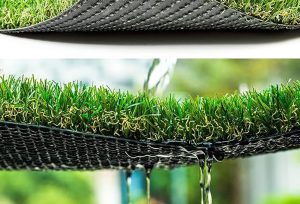
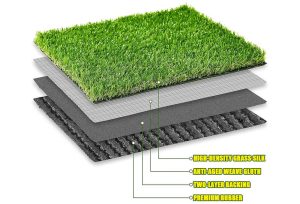
Non-infill artificial grass is designed to perform without the need for additional infill materials. It typically features:
- Thatch in the root zone to support fibers.
- Narrow gauge (less than 3/8 inch).
- High stitch rate for density and durability.
While these attributes define non-infill grass, there are no strict technical standards for when infill is necessary. The key is ensuring that non-infill grass is dense, flexible, and capable of withstanding traffic without flattening.
Does Grass with Thatch Qualify as Non-Infill?
Not all grass with thatch qualifies as non-infill. Some products may lack the density required to keep fibers upright, making them prone to flattening under pressure. In such cases, adding silica sand as infill improves stability, flexibility, and durability.
Making the Decision: Infill or Non-Infill?
The choice between infill and non-infill artificial grass depends on the specific requirements of your project. Here are some recommendations for different scenarios:
1. Landscaping and Play Areas
- Low-Traffic Areas: Non-infill artificial grass is sufficient and requires minimal maintenance.
- High-Traffic Areas: Silica sand infill is recommended to increase the lifespan and stability of the grass.
Key Applications for Non-Infill Grass:
- Yards with steep slopes.
- Play areas for children and pets.
- Pool surroundings.
Our non-infill artificial grass features thatch, a narrow gauge, and high stitch rates, making it ideal for these applications. It provides a safe, durable, and low-maintenance surface that remains cool and clean, even in challenging environments.
2. Football Fields
Traditional football fields often require infill to maintain fiber uprightness and enhance performance:
- Silica Sand: Stabilizes the turf and accounts for 70% of the total infill weight.
- Rubber Granules: Add cushioning and bounce, accounting for 30% of the infill weight.
However, we also offer non-infill football grass that combines advanced yarn and tufting designs to eliminate the need for sand or rubber infill. These products are suitable for smaller pitches and multi-sport fields, offering faster installation and reduced maintenance.
Will Non-Infill Artificial Grass Provide Enough Resilience?
Non-infill systems rely on their curled fibers to provide cushioning and resilience. While suitable for smaller football fields, landscaping, and pool areas, adding a shock pad beneath the grass is recommended for areas requiring extra shock absorption, such as professional football fields or playgrounds.
Shock pads are available in various types, and we can provide recommendations tailored to your project.
Conclusion
The decision between infill and non-infill artificial grass depends on your specific requirements. Below is a quick summary of recommendations:
Landscaping and Play Areas
- For low-traffic areas, non-infill grass is sufficient.
- For high-traffic areas, infilling with silica sand enhances stability and durability.
- Non-infill options are ideal for slopes, children’s play areas, and pool surroundings.
Football Fields
- Traditional Fields: Infilled grass provides superior performance and flexibility.
- Smaller Pitches: Non-infill football turf is an excellent low-maintenance alternative, especially with the addition of a shock pad.
Whether you choose infill or non-infill artificial grass, consulting a professional installer or contacting us can ensure the best results for your project. We are here to provide expert advice and tailored solutions for all your artificial grass needs!